Introduction
The way people discover, research, and purchase products has changed dramatically. Today, customers are more likely to search on Google, check Instagram, watch a YouTube video, read online reviews, or compare brands on social media before making a decision.
This is where digital marketing comes in.
Digital marketing is no longer something only large companies need. Whether you run a small local business, an e-commerce store, a startup, or an established company, having a strong digital presence is essential for reaching customers and staying competitive.
At RiseWave Digital Marketing Agency, we believe that successful digital marketing is about more than simply posting content or running advertisements. It is about creating meaningful connections with the right audience and turning those connections into measurable business growth.
What Is Digital Marketing?
Digital marketing refers to the promotion of products, services, or brands through digital channels such as search engines, websites, social media, email, online advertising, and other internet-based platforms.
Unlike traditional marketing methods such as newspapers, television, radio, and billboards, digital marketing allows businesses to reach specific audiences, interact with customers, measure campaign performance, and make data-driven decisions.
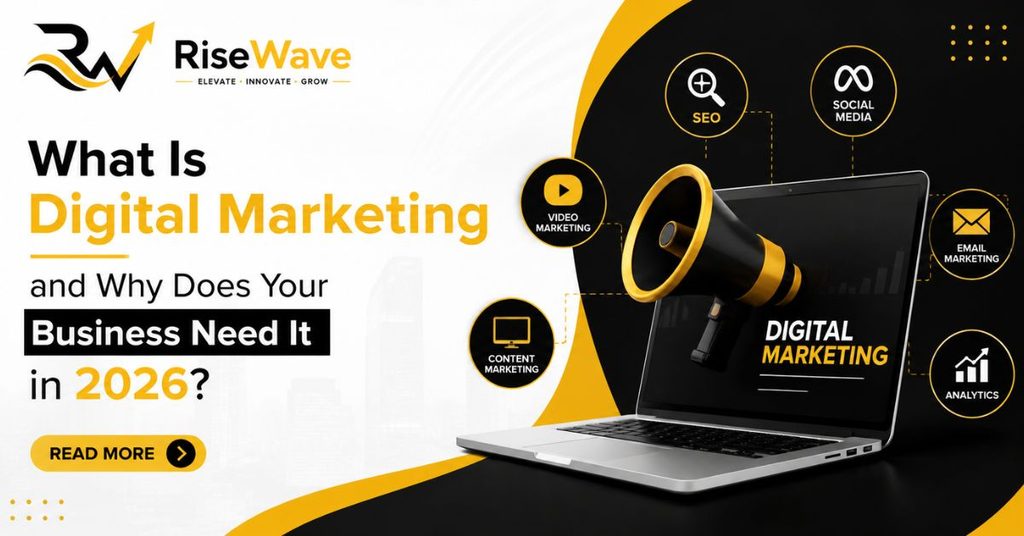
Some of the major areas of digital marketing include:
- Search Engine Optimization (SEO): Improving your website’s visibility on search engines.
- Social Media Marketing: Building your brand and engaging with audiences on platforms such as Instagram, Facebook, LinkedIn, and other social networks.
- Content Marketing: Creating valuable blogs, videos, graphics, and other content to attract and educate potential customers.
- Pay-Per-Click Advertising (PPC): Running paid advertisements on search engines and digital platforms.
- Email Marketing: Communicating directly with customers through targeted email campaigns.
- Website Marketing: Creating an attractive, fast, user-friendly website that converts visitors into customers.
- Analytics and Performance Marketing: Using data to understand what works and continuously improve marketing campaigns.
Why Does Your Business Need Digital Marketing in 2026?
1. Your Customers Are Online
One of the biggest reasons businesses need digital marketing is simple: your customers are spending their time online.
People use digital platforms every day to search for information, discover brands, compare products, read reviews, and make purchases.
If your business is not visible online, potential customers may never discover you. A strong digital presence allows your brand to appear where your customers are already looking.
2. Build a Strong Brand Presence
In 2026, having a website alone is not enough.
Customers want to understand who you are, what you offer, and why they should choose you over competitors. Your website, social media profiles, content, advertisements, and online reviews all contribute to your brand image.
Consistent digital marketing helps create a recognizable identity and builds trust with your audience.
A professional and consistent online presence can make your business appear more credible, reliable, and memorable.
3. Reach the Right Audience
Traditional advertising often involves communicating with a broad audience. Digital marketing gives businesses the ability to target specific groups based on factors such as interests, location, online behavior, demographics, and search intent.
For example, instead of showing an advertisement to thousands of random people, a business can create a campaign designed specifically for people who are likely to be interested in its product or service.
This makes marketing more relevant and can help businesses use their budgets more effectively.
4. Generate More Leads and Sales
The ultimate goal of marketing is not simply to gain followers or website visitors. It is to generate meaningful business results.
Digital marketing can guide potential customers through different stages of the buying journey.
A person may first discover your brand through a social media post. They might then visit your website, read a blog, sign up for an offer, and eventually become a customer.
With the right strategy, digital channels can work together to create a complete customer journey—from awareness to conversion.
5. Measure Your Results
One of the biggest advantages of digital marketing is measurability.
Businesses can track important performance indicators such as:
- Website traffic
- Engagement
- Leads
- Click-through rates
- Conversion rates
- Advertising performance
- Customer acquisition costs
- Sales generated through campaigns
This information allows businesses to understand what is working and what needs improvement.
Instead of relying entirely on assumptions, marketers can use data to make smarter decisions.
6. Compete With Larger Businesses
Digital marketing has created opportunities for businesses of all sizes.
A small business does not necessarily need the advertising budget of a multinational company to build an audience online. With a focused strategy, valuable content, strong SEO, engaging social media, and well-targeted advertising, smaller businesses can compete for attention in their niche.
The key is not always to spend more—it is to market smarter.
7. Build Long-Term Customer Relationships
Digital marketing is not only about attracting new customers. It is also about maintaining relationships with existing ones.
Social media, email marketing, helpful content, loyalty campaigns, and personalized communication can keep your brand connected with customers long after their first purchase.
When customers feel that a brand understands and provides value to them, they are more likely to return and recommend it to others.
How to Create a Digital Marketing Strategy
A successful strategy does not begin with randomly posting on social media. It begins with understanding your business and your customers.
Start by defining your marketing goals. Do you want more website traffic, leads, sales, brand awareness, or customer retention?
Next, identify your target audience. Understand their needs, problems, interests, and online behavior.
Then choose the right digital channels. Not every business needs to be active on every platform. Focus on the channels where your target customers are most likely to engage.
Create valuable and consistent content, optimize your website for search engines, use paid advertising where appropriate, and regularly analyze your results.
Most importantly, keep testing and improving. Digital marketing is an ongoing process, not a one-time activity.
Conclusion
Digital marketing has become an essential part of modern business growth. In 2026, customers expect businesses to be accessible, visible, informative, and engaging online.
From SEO and social media to content, paid advertising, and analytics, every digital channel can play a role in helping your business attract the right audience and turn opportunities into results.
At RiseWave Digital Marketing Agency, our goal is simple: Elevate. Innovate. Grow.
We help businesses build stronger digital identities, connect with their target audiences, and create strategies designed for sustainable growth.
Your customers are already online.
The question is: Is your business ready to make waves?
Ready to elevate your digital presence? Connect with RiseWave and start building your digital growth strategy today.